
Homepage of R. M. Matthijs Cornelissen
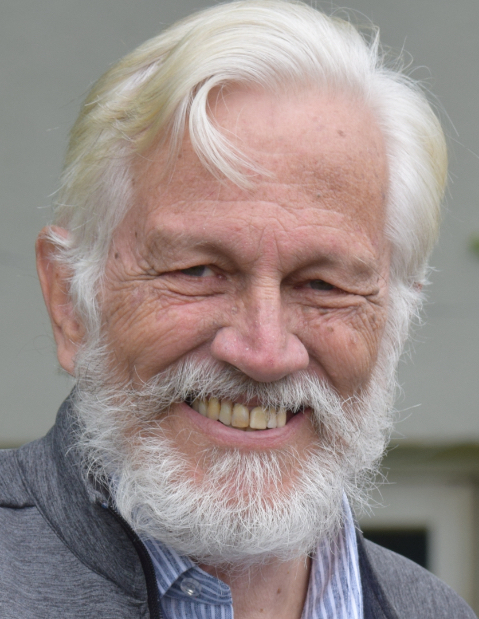 |
Matthijs Cornelissen was born in The Netherlands and studied Medicine and Psychology in Amsterdam. He is deeply interested in the work of Sri Aurobindo, and when 27, he moved to India where he has lived ever since. In the Delhi Branch of the Sri Aurobindo Ashram he helped setting up the Institute for Integral Education, Mirambika, and at present he teaches the psychological aspects of Sri Aurobindo's work at SAICE in Pondicherry. He assisted with the publication of Sri Aurobindo's Complete Works, and wrote a few articles and book chapters on Sri Aurobindo's contributions to Consciousness Studies and Psychology. He also organised conferences, gave workshops and lectures, and edited books on the same subject. He founded and maintains the websites of the Sri Aurobindo Centre for Consciousness Studies, the Indian Psychology Institute and Infinity in a Drop.
Matthijs can be reached at matthijs @ ipi.org.in (please remove spaces!) |
- Cornelissen, R. M. Matthijs (ongoing).
Infinity in a Drop.
Infinity in a Drop is an attempt at helping with the creation of a new, consciousness-centred foundation for psychology.
It is inspired by the integral synthesis of Indian and Western thought which Sri Aurobindo made in the first half of the twentieth century. - Cornelissen, R. M. Matthijs (2004). Sri Aurobindo's Evolutionary Ontology of Consciousness.
In this article a comparison is drawn between Sri Aurobindo's evolutionary conceptualization of consciousness and the concepts of consciousness more commonly encountered in contemporary consciousness studies. A number of ontological and epistemological questions arising out of this comparison are discussed. A slightly modified version was published as a chapter in Helmut Wautischer (ed.). (2008) Ontology of Consciousness: Percipient Action, Boston: The MIT Press.
- Cornelissen, R. M. Matthijs (2009). What is knowledge? A reflection based on the work of Sri Aurobindo.
This article looks from an experiential angle at the different types of knowledge that are involved in yoga-based research. A slightly shorter version has been included in Matthijs Cornelissen, Girishwar Mishra and Suneet Varma (eds.) (2015), Foundations and Applications of Indian Psychology, New-Delhi: Pearson.
- Cornelissen, R. M. Matthijs (2016).
The self and the structure of the personality as described by Sri Aurobindo.
A detailed overview of Sri Aurobindo's terminology. The link goes to the slightly revised version that has become part of Infinity in a Drop.
- Cornelissen, R. M. Matthijs (2011). Types of knowledge and what they allow us to see. How our research methods affect the quality of our psychological understanding: a comparison between some very different approaches to Psychology.
- Cornelissen, R. M. Matthijs (2015). Sri Aurobindo's four types of knowledge and their use in Psychology: Towards rigorous subjectivity.
Sri Aurobindo describes in one chapter of The Life Divine, four types of knowledge that all occur in our ordinary waking consciousness. When one realises that each of them has an expert as well as a naïve variety, it becomes clear that for Psychology we should use a different type of expert knowledge than for Physics.
This text is a slightly further elaborated, stand-alone version of Part Two of Types of knowledge and what they allow us to see. - Cornelissen, R. M. Matthijs (2011). Beyond the mask: An exploration of human identity based on the work of Sri Aurobindo.
After a quick attempt at placing "Indian Psychology" within the context of mainstream academic psychology, the first half of this article discusses the methods that Indian psychology uses to explore our human sense of identity. The second half offers some of its salient findings, regarding both, our surface nature and our innermost Self.
- Dalal, Ajit K., & Cornelissen, R. M. Matthijs (2010). Sri Aurobindo: A Yogi and a Poet.
The chapter discusses the biography of an eminent Indian yogi and a poet, Sri Aurobindo. It also throws light on his creative genius as evident in his writings, particularly in his classic work, Savitri.
- Cornelissen, R. M. Matthijs (2009). Onward she passed... Rejection as described in Savitri.
The article takes examples from Savitri, a book by Sri Aurobindo, to explain the concept of "rejection", one of the three main skills needed for any true spiritual endeavour. It traces the crucial role played by rejection in the yoga of Ashwapati and Savitri.
- Cornelissen, R. M. Matthijs (2009). Sri Aurobindo, A short biography.
- Cornelissen, R. M. Matthijs (1998/2005). Self and personality in Sri Aurobindo's yoga: A short overview of his terminology.
A very short overview of the terms Sri Aurobindo uses to explain the different parts and planes of our nature. For a more detailed discussion, see "The self and the structure of the personality as described by Sri Aurobindo" (2016)
- Cornelissen, R. M. Matthijs (2004). The Sevenfold Chord of Being.
This is a description of the different planes of consciousness as described by Sri Aurobindo: the physical, vital and mental below, saccidananda above, and the plane of vijnana, or gnosis in between. It was originally part of Sri Aurobindo's Evolutionary Ontology of Consciousness.
- Cornelissen, R. M. Matthijs (2015). Classical Behaviourism.
The heyday of Classical Behaviourism is over, but have we fully recovered?
- Cornelissen, R. M. Matthijs (2011).
Are Schools Injurious to Health?.
Educational theories and policies tend to include noble and inspiring ideals regarding the "all-round development" of the students. The practice lives, however, rarely up to the intent. More often than not, the content of the curriculum and the manner in which it is transacted are such, that a negative effect on the healthy development of the students is almost inevitable. This chapter asks attention for some of these factors, and suggests that much could be gained, if we would be more open to what the Indian tradition can contribute to contemporary psychology.
- Cornelissen, R. M. Matthijs (2007). In Defence of Rigorous Subjectivity.
This article gives the basic argument why rigorous, yoga-based, research of first person experience is necessary to take Psychology further. It is based on a keynote given at the Annual Conference of the Transpersonal Psychology Section of the BPS in 2007.
- Cornelissen, R. M. Matthijs (2006). Research about yoga and research in yoga: Towards rigorous research in the subjective domain.
This article tries to explain how first-person, yoga-based research can be made rigorous and reliable.
- Cornelissen, R. M. Matthijs (2005). Psychology: Five major Indian contributions.
This article discusses the five major contributions which the Indian tradition can make to psychology, and then focusses on six passive and six active aspects of consciousness as conceptualized by Sri Aurobindo.
- Cornelissen, R. M. Matthijs (2002). Integrality.
An informal talk given at the Cultural Integration Fellowship in San Fransisco, linking the concept of integrality back to the Sanskrit word "purna" (April 2002). A revised and expanded version of this text has appeared as a chapter in Infinity in a Drop
- Cornelissen, R. M. Matthijs, Misra, Girishwar, & Varma, Suneet (Eds.) (2014). Introduction to Foundations and Applications of Indian Psychology.
- Cornelissen, R. M. Matthijs (2001). Introducing Indian Psychology, the Basics.
- Cornelissen, R. M. Matthijs (2001). Towards an Integral Epistemology of Consciousness: A radical proposal based on Sri Aurobindo's work.
A paper presented at the National Institute of Advanced Studies in Bangalore during a conference on Consciousness and Evolution (June 2001).
- Cornelissen, R. M. Matthijs (2000). The Integration of Psychological Knowledge from the Spiritual Traditions in the Psychology Curriculum.
A paper published in the journal of the Consciousness and Experiential Psychology section of the British Psychological Society (August 2000).
- Cornelissen, R. M. Matthijs (2001). Introduction to Consciousness and Its Transformation.
- Cornelissen, R. M. Matthijs, Misra, Girishwar, & Varma, Suneet (Ed.) (2014). Foundations and Applications of Indian Psychology
This book explores the widely under-explored and under-rated area of Indian psychology. It traces the origins, scope and development of Indian Psychology as an emerging discipline. The twenty-six essays in this book not only cover a broad spectrum of topics but also link mainstream topics that are taught in General Psychology with Indian thought.
- Joshi, Kireet & Cornelissen, Matthijs (Ed.), (2004). Consciousness, Indian Psychology and Yoga, (Project on the History of Science, Philosophy and Culture in Indian Civilization, Vol. XI, Part 3). New Delhi: Centre for Studies in Civilizations.
Devoted to the exploration of consciousness and yoga, this volume is an attempt to bring the Indic tradition and the social sciences closer together. Its focus is on three major contributions: a deep and many-faceted understanding of consciousness, a well-worked out methodology to arrive at reliable knowledge of the subjective domain, and a variey of methods to transcend and transform human nature.
- Cornelissen, R. M. Matthijs (2001). Consciousness and Its Transformation.
The Contents of this book gives access to the full text of all the chapters.
- Cornelissen, R. M. Matthijs (2020). Short introductory videos to Infinity in a drop.
This page has links to short videos intended to encourage classroom discussions on a new, consciousness-centred approach to psychology. For each video there are links to web-based texts that give more detailed information.
- Cornelissen, R. M. Matthijs. Longer videos related to Infinity in a drop.
work in progress
longer articles related to Sri Aurobindo and his work
shorter articles related to Sri Aurobindo and his work
articles on other issues
short introductions to Indian Psychology
books
videos